How to choose a vacuum sealer: all criteria according to the type of machine
press-room | 31st March 2023
When choosing a professional vacuum sealer, the most important criteria are three: technical performance, the type of model and the intended use. Chamber vacuum sealers are ideal for continuous, high-volume processing and for sous vide cooking. External-extraction models are well suited to less intensive use and smaller spaces.
By taking into account the specific needs of your business, you can choose the option best suited to your work rhythms.
Why choosing the right vacuum sealer is so important in a professional setting
In any type of food service, it is essential to only use professional vacuum sealers.
Domestic appliances rarely achieve a vacuum level higher than 85%. Whilst this figure may appear high, vacuum levels exceeding 99% are necessary for optimal food preservation, and especially for sous vide cooking.
Only with a near-complete vacuum it is possible to halt bacterial growth and store food safely for extended periods.
However, within the professional sphere, there are different uses, each with specific requirements.
Different uses of a vacuum sealer
In professional kitchens, vacuum sealing is used primarily for food preservation and to prepare ingredients for sous vide cooking.
In both cases, the process is the same, but the bags used to package the food differ, as they must meet additional requirements when used for cooking.
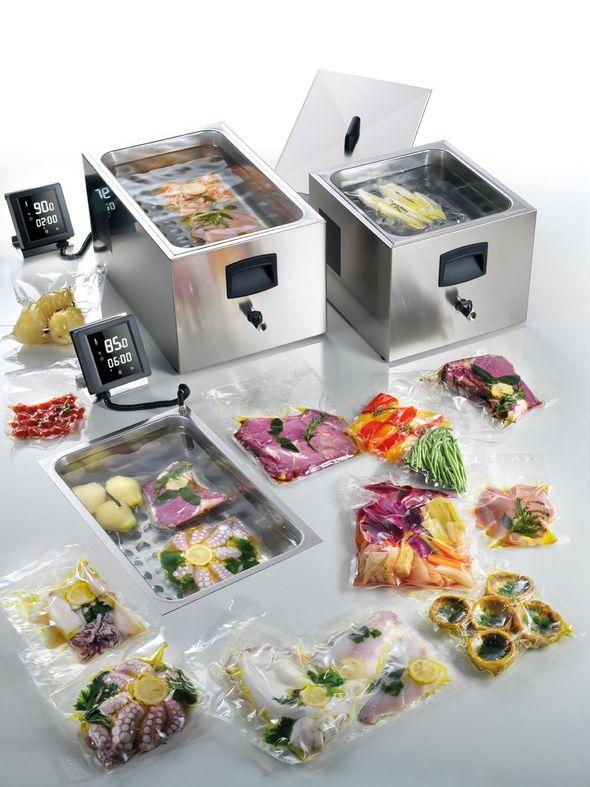
It is particularly important to achieve a near-total vacuum in order to safely manage slow cooking processes at low temperatures.
Types of vacuum sealers
There are two types of professional vacuum sealers, which differ in terms of how they operate and in the efficiency they offer. Both must be clearly distinguished from domestic models.
External vacuum sealers
External vacuum sealers are not suitable for sous vide cooking, even when they are professional models. Their main purpose is the packaging and preservation of food, which takes place in rigid external containers.
Pictured: The external vacuum sealer Vacuex
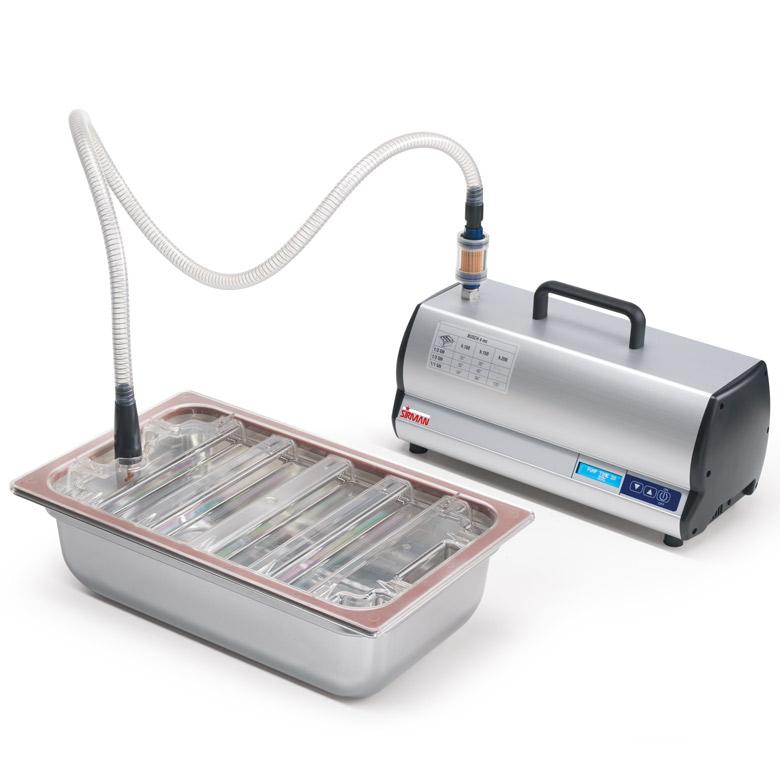
Depending on the quality of the model and the material of the container, they can achieve a very high vacuum level. However, in most professional settings, chamber vacuum sealers are preferred as they are more efficient, versatile and cost-effective.
Chamber vacuum sealers
Machines with an internal chamber are capable of producing a vacuum close to 100% and are therefore ideal for catering requirements. It is with this type of machines that food is packaged for sous vide cooking.
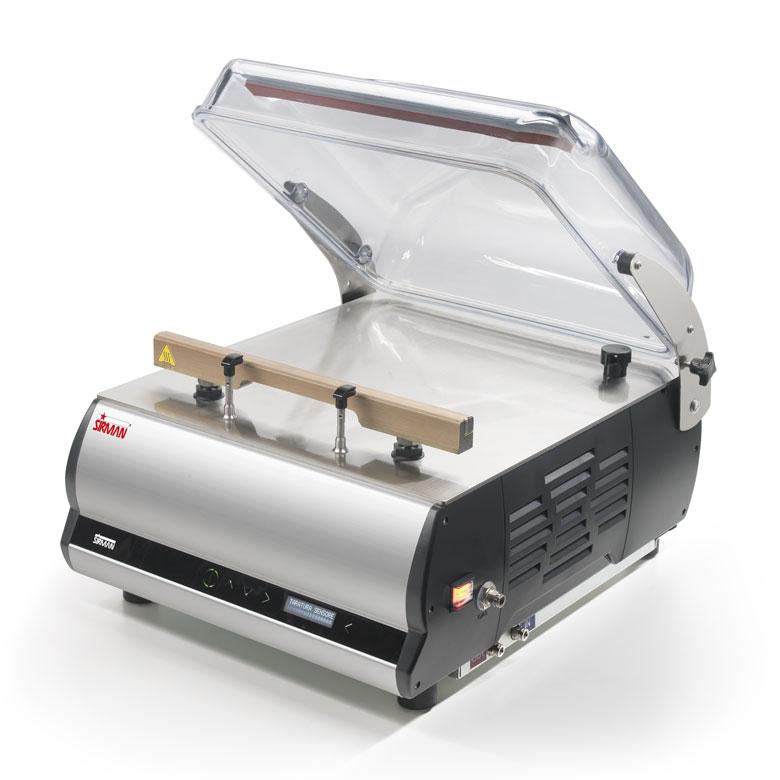
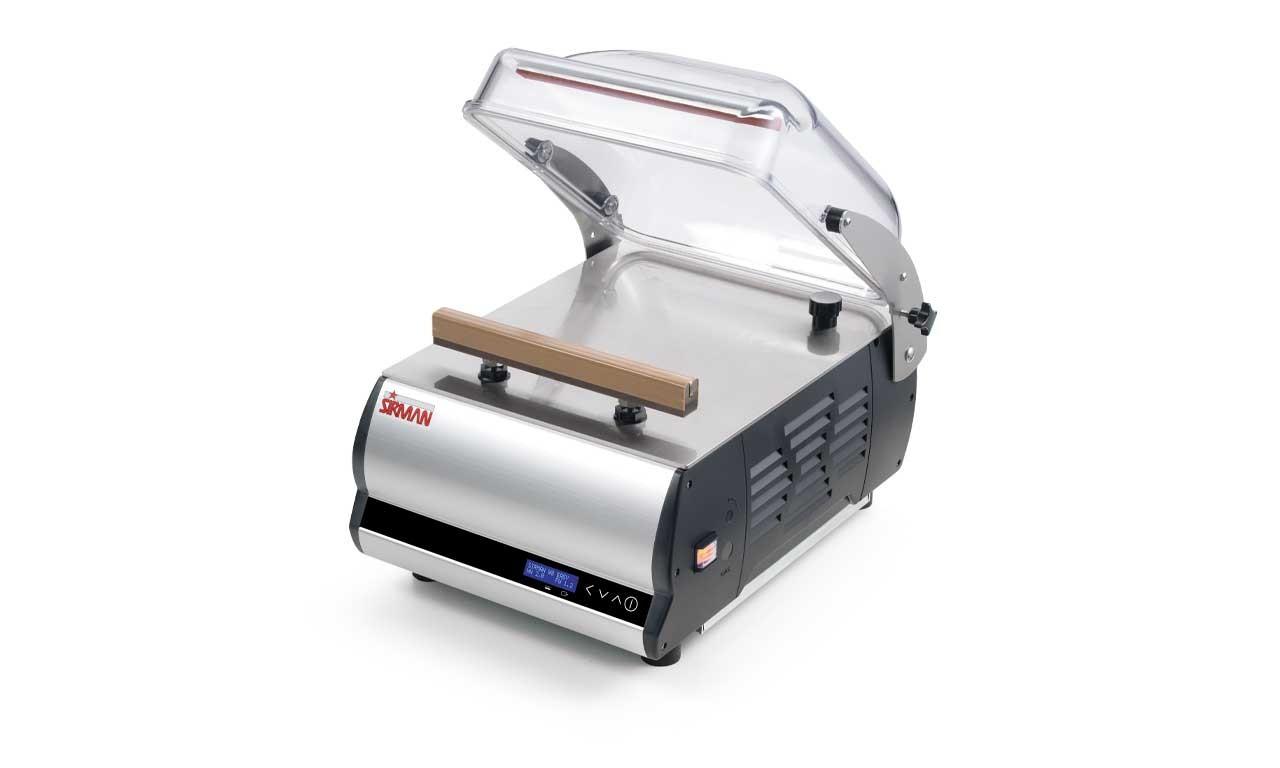
Depending on the model, they are equipped with an internal tank or a work surface with a domed lid in a characteristic bell shape. In both cases, packaging takes place with the lid closed, inside the machine.
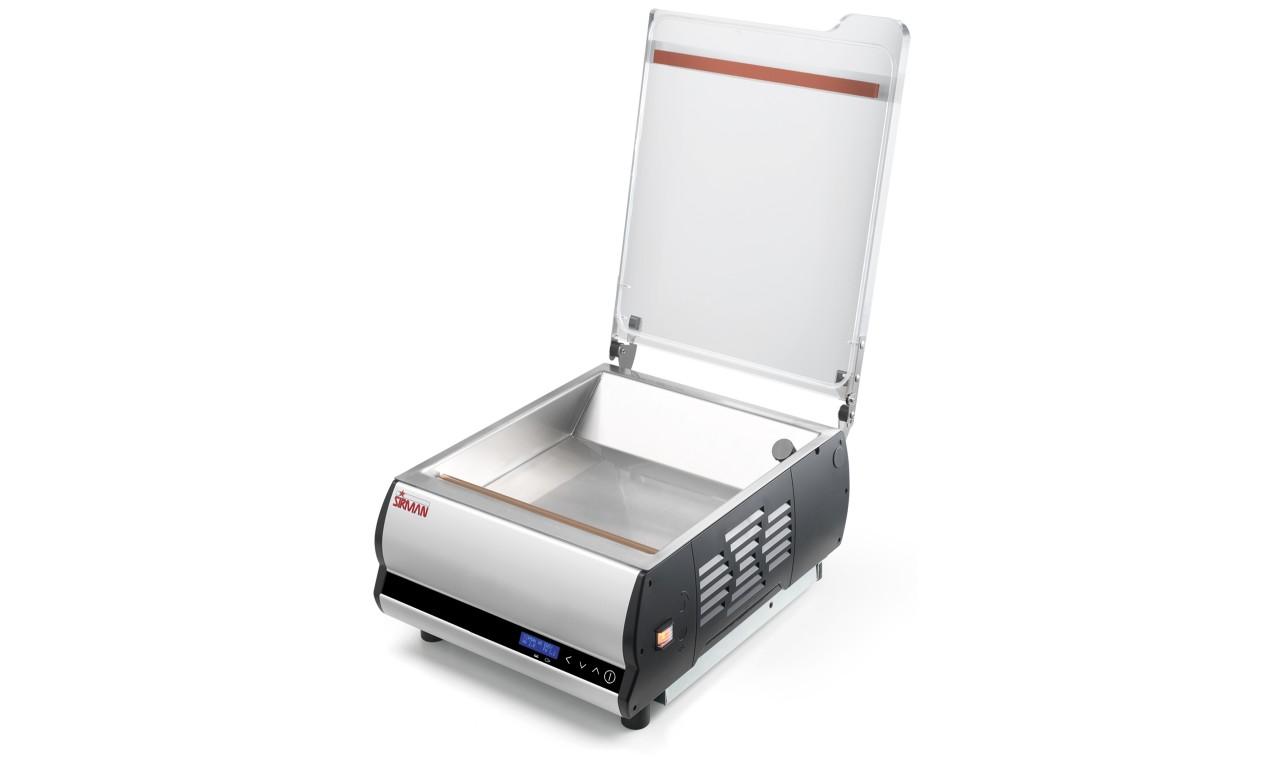
Pictured: Sirman’s Easyvac Touch vacuum sealer
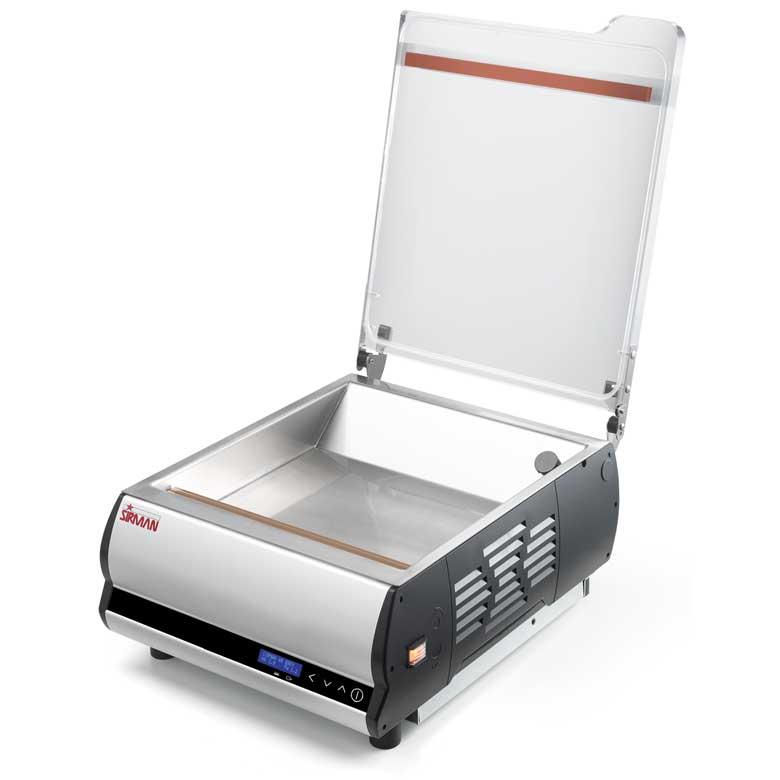
Among the main advantages of these models are their reliability, the high vacuum levels achievable and the ability to handle larger volumes. Additionally, with chamber models, it is also possible to vacuum-seal liquids and crumbly foods.
Differences from domestic models
Domestic vacuum sealers use an external extraction mechanism but do not use rigid containers. The embossed bags used with these models are placed directly on the sealing bar, which is located on the outside of the machine. They are compact, lightweight, and easy to use in the kitchen, but they produce a lower vacuum level, around 70–80%, which is by no means sufficient for professional use.
Technical criteria to consider before making a choice
In addition to choosing between an external vacuum model and a chamber machine, there are a number of technical criteria to consider before making a purchase. These relate to the user’s individual requirements, as well as the machine’s performance and its operation.
Pump power and vacuum level
The pump is the heart of the machine. Its flow rate, expressed in m³/h, should be selected in proportion to the daily production volume and the type of products that will be packaged. Wet, liquid or large-sized foods, for example, require more powerful pumps.
As a general rule, for continuous professional use, the minimum advisable is 10–16 m³/h, but the type of pump and the manufacturer also affect quality.
Oil-sealed or dry-running pump
Machines that use a dry-running pump are less efficient and achieve lower vacuum levels than those equipped with an oil-sealed pump. However, there are also differences related to the pump’s power and brand. Among the most reliable manufacturers of oil-sealed pumps are DVP and Busch, whose models have high power output and are therefore very efficient and quick at creating a vacuum.
Cycle time
The cycle time refers to the time taken to complete a packaging operation, from air extraction to bag sealing. It can be a decisive factor, particularly in high-volume settings.
Materials and hygiene standards
In a professional setting, the machine’s materials must comply with health and hygiene regulations. This entails, for example, surfaces made of AISI 304 stainless steel or higher grade materials, which are easy to sanitise and resistant to chemical detergents.
A professional machine must also ensure that there are no areas where residues may accumulate.
The inert gas option
Some models are designed to package food in a protective atmosphere using inert gas. This is essential for packaging crumbly and fragile foods, which would otherwise be crushed by the removal of air. An inert gas, usually nitrogen, replaces the air in the package, creating an environment with the same safety characteristics as a vacuum.
User-friendliness of the software and controls
The user-friendliness of a vacuum sealer partly depends on its software and controls. Therefore, it is important to choose a machine that meets your needs and offers practical, functional and intuitive controls.
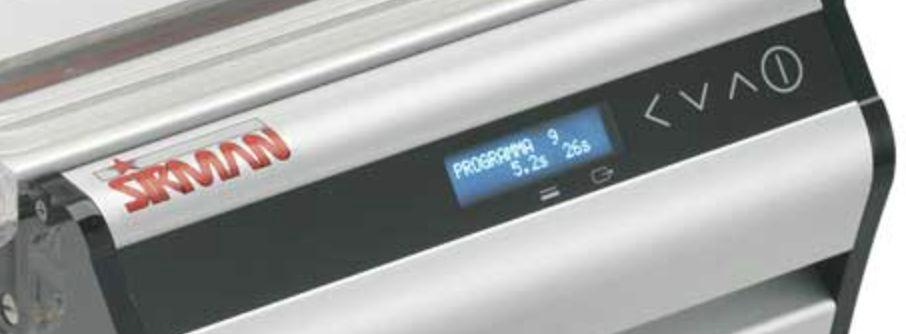
For demanding chefs, SIRMAN’s most advanced models are equipped with artificial intelligence, which allows certain steps to be automated, including the setting of the vacuum time. They also directly detect the need for maintenance tasks, such as oil changes or the calibration of vacuum sensors, and notify the user.
One final point: cleaning and maintenance
A vacuum sealer requires regular cleaning and maintenance to operate with maximum efficiency and safety. Among these, oil changes stand out. They are often carried out by authorised technicians, but for some models they can be performed by the users themselves. To further simplify this process, a patented feature on the latest SIRMAN models allows for automatic oil changes by connecting the machine to an external reservoir.
The ease with which maintenance can be carried out is a significant factor in choosing a machine, as it will affect running costs and user experience.
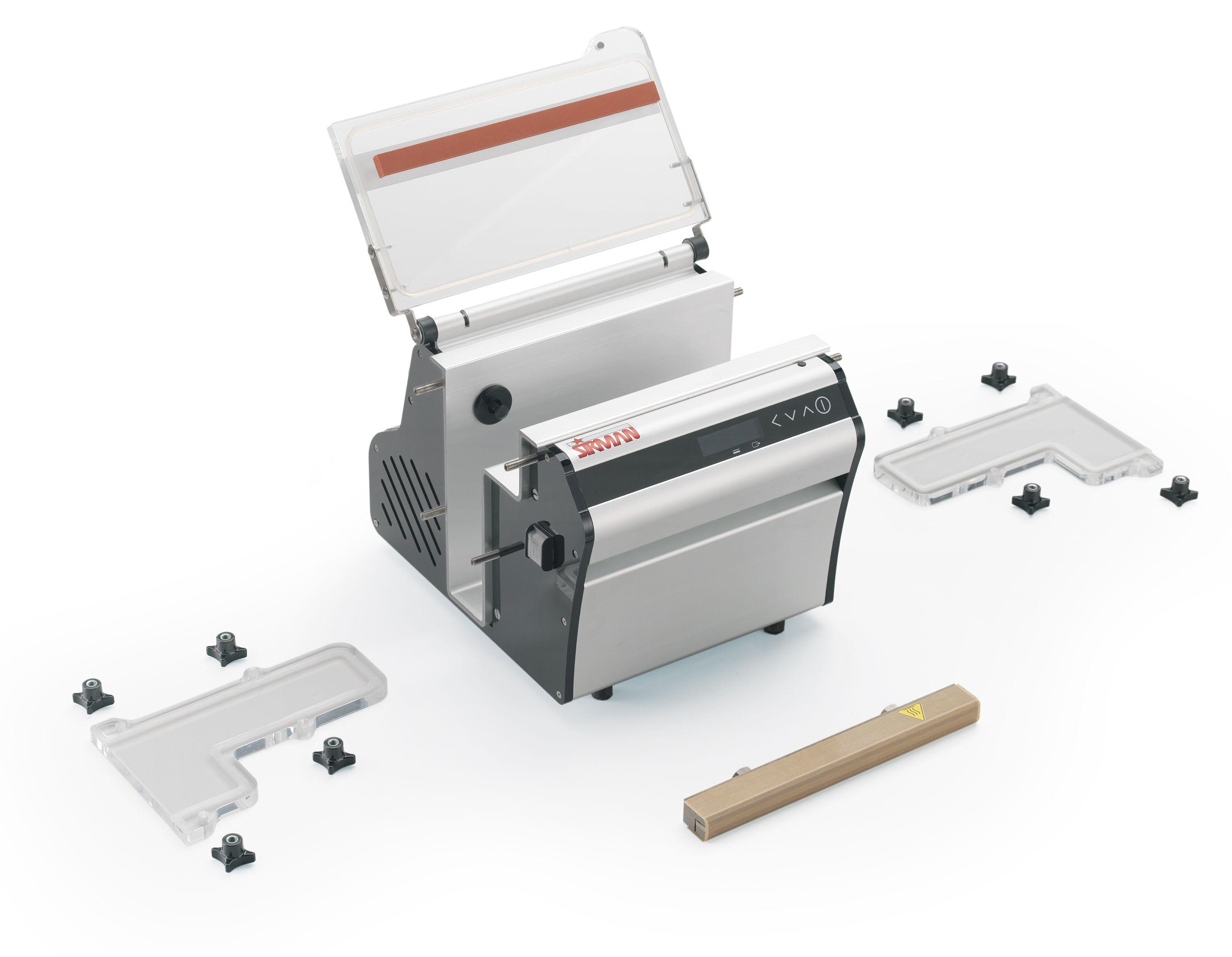
Pictured: Sirman’s Vertigo 30 vacuum sealer
The best models for different uses
As we mentioned, the choice of a vacuum sealer depends on its intended use. We will now look in more detail at some typical settings and their requirements.
Restaurants and catering
In a professional kitchen, the vacuum sealer must ensure rapid and continuous cycles, as well as compatibility with sous vide cooking techniques. Chamber models with a high-performance pump are generally the best choice, as they can be used both for packaging ingredients and for preparing dishes in advance.
Delis and food workshops
Those working in food workshops or delis need a machine that is reliable over long shifts and therefore suitable for intensive use. In this context, models with large chambers are also preferable, as they allow for the packaging of bigger portions.
Butcheries and cured meat producers
The processing of cured meats and sausages requires machines designed to handle irregular, moist and large-sized products. For this reason, the sealing bar must be particularly robust. Bell-type models with a double sealing bar are often preferred, as they ensure a secure seal even in the presence of grease or moisture on the edge of the bag.
Common mistakes when choosing a vacuum sealer
When choosing a vacuum sealer, people often make mistakes that are difficult to rectify after the purchase. These are the most common ones:
- Focusing solely on the purchase price without considering the cost of bags, pump maintenance and the average lifespan of the machine.
- Underestimating production volume and choosing a model that is too small, which causes the risk of overheating and premature wear.
- Confusing domestic and professional machines. Domestic models are never suitable for professional use.
- Neglecting the size of the chamber or sealing bar, which must be appropriate for the size of the products.
- Failing to consider ease of cleaning, a critical aspect in a professional setting that affects product hygiene and compliance with regulations.
- Relying on non-specialist brands or purchasing channels. This choice precludes access to technical support, after-sales service and warranty-covered original spare parts.
It is important to consider these points while evaluating a machine, in order to make an informed choice that is appropriate for your working environment.
Frequently asked questions
We close the article by answering some frequently asked questions about the choice of a vacuum sealer. These answers will also summarize some concepts already explored in the article.
What is the difference between a chamber vacuum sealer and an external extraction model?
In a chamber vacuum sealer, the bag with the food is placed inside a sealed chamber and the air is extracted from the entire internal volume. This achieves very high vacuum levels, close to 100%.
In external extraction models, the air is drawn directly from the bag or container, with varying effectiveness depending on the machine’s power and the type of container used.
Do professional vacuum sealers work with any type of bag?
No. Chamber vacuum sealers are generally compatible with smooth bags, whilst external-suction models always require embossed bags or specific containers.
How long does a professional vacuum sealer last?
A high-quality professional vacuum sealer can last 10 to 15 years with proper maintenance. Changing the oil and regularly checking the seals and sealing bar are essential for the machine’s longevity, as is the frequency of use. A machine that is undersized for the actual workload will wear out sooner.
What is the difference between a vacuum sealer and a packaging machine?
A vacuum sealer is used to remove air from the packaging to extend the product’s shelf life or prepare it for sous vide cooking.
The term packaging machine, on the other hand, refers to a more complex system designed to form, fill and seal packages automatically or semi-automatically, not necessarily in the absence of air. In many industrial contexts, the two functions are combined, but these are different machines from the vacuum sealers used in the catering industry.
12

Other news that may interest you
13
17th September 2026
How to choose a professional pasta machineIn a professional setting, it is essential to choose a pasta machine that delivers consistent quality, sustainable working times and a long-lasting investment.
4th December 2025
How to obtain technical support for Sirman products, from blenders to slicersDiscover how to access Sirman support channels.
14th November 2025
How to choose a professional sous-vide machineFind the best sous-vide machine for your business, by taking into account general and user-specific criteria.
12th December 2024
How does a vacuum sealer work? Technology and benefitsA brief guide to vacuum sealers and their technology
9th October 2023
Vacuum cooking in contemporary cuisine: what is a Softcooker, and where did it come from?Discover how this innovative technique has revolutionized professional kitchens through the use of high technology and its exceptional results
1st September 2023
Innovation in the field of sous vide cooking: Softcookers and vacuum sealersSous vide: choose the best machines for perfect cooking.
27th July 2023
Amid cooking and science: how does low-temperature cooking work?Low-temperature, or sous vide, cooking is a slow cooking technique that requires a vacuum to be created using safe and professional machinery, in order to obtain high-quality results.
7th July 2023
How to clean your slicer: a practical guide to sanitation, maintenance and sharpeningA clean slicer is an efficient slicer. Learn the best practices for maintenance and which models are easiest to clean.
News | 14th June 2023
How to use the professional vacuum sealer: accessories, cleaning and maintenanceThis article will teach you everything you need to know about how they work and the necessary maintenance activities.
24th May 2023
Food safety: how to avoid cross contaminationCross contamination is the transfer of microorganisms or chemicals from one food to another. This process generally occurs when raw and cooked foods come into contact.