How does a vacuum sealer work? Technology and benefits
News | 12th December 2024
As the name suggests, a vacuum sealer packages food by removing the air. It does this through a simple mechanism, which varies depending on the model. The basic principle remains the same, but the results and applications differ considerably.
How vacuum sealing works: technology and advantages
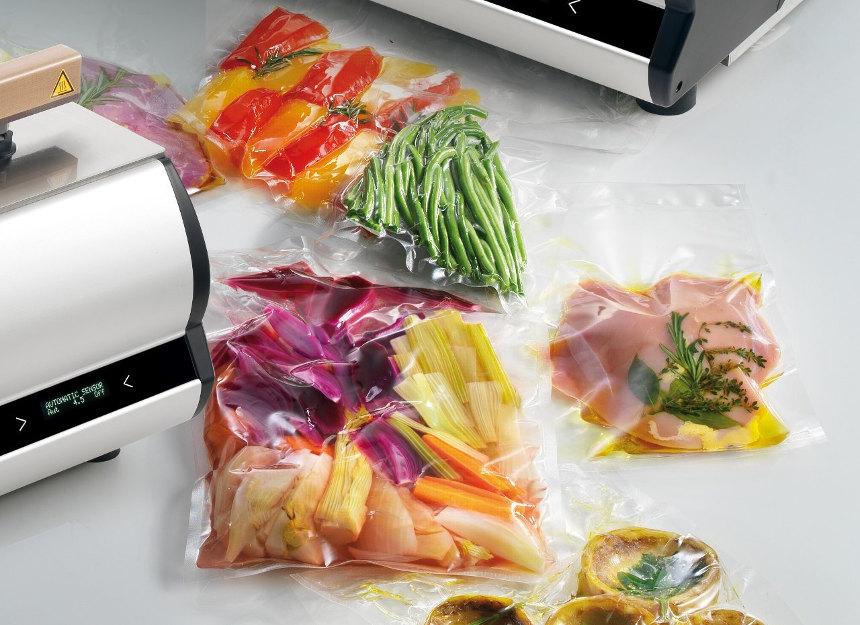
Every vacuum sealer uses two components: a vacuum pump, which draws air out of the bag, and a sealing bar, which seals it at the end of the process. This technique allows food to be packaged with very high vacuum levels, approaching 100% for some machines. It is used primarily for two purposes: to extend the shelf life of food and to prepare it for sous vide cooking.
The first use is less complex. All models can be used for portioning and storing food, although professional models, and especially chamber vacuum sealers, offer far superior performances. They allow food to be kept up to four or five times longer, with clear benefits in both professional and domestic kitchens.

However, when it comes to preparing food for sous vide cooking, the degree of vacuum achieved is essential to ensure food safety. This is why only chamber machines are used in professional settings, as they are the only ones capable of producing a near-complete vacuum that exceeds 99%. We have already discussed the benefits of sous vide cooking in a previous article. Vacuum sealers deserve a separate in-depth look.
How does an external vacuum sealer work?
External vacuum sealers are the simplest and most commonly used domestic model. They are small and compact appliances, fitted with an external sealing bar. The food to be sealed is placed in the vacuum bag, then the open end is inserted between the sealing bars. Once activated, the machine extracts the air from the bag and seals it.
There are also professional external vacuum machines, which generally use special metal containers. In this case, the air is extracted from the container via a tube and, at the end of the operation, the access valve is sealed. One such model is the Vacuex by Sirman.
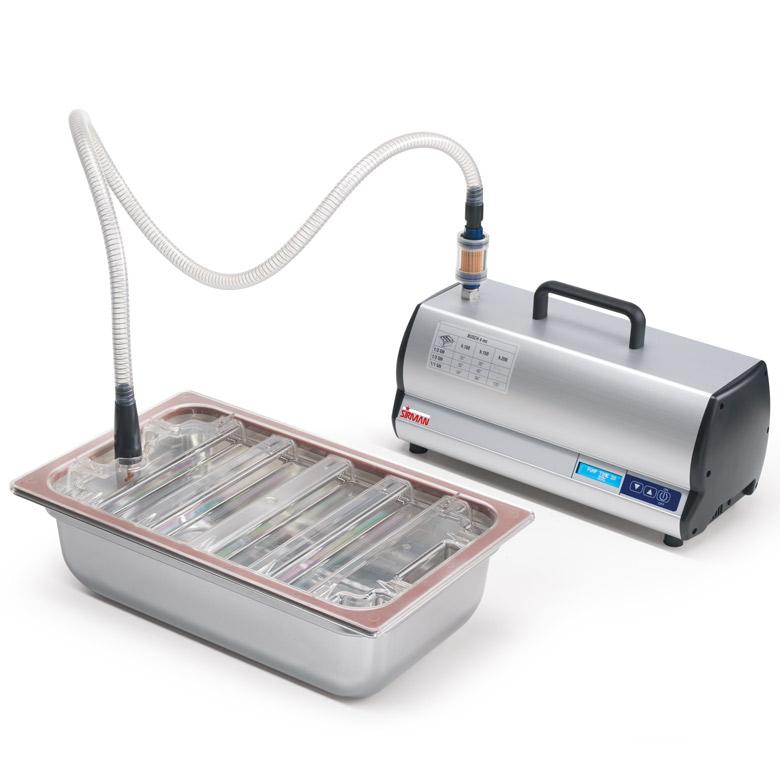
Pictured: Sirman’s Vacuex model
How does a chamber vacuum sealer work?
Chamber vacuum sealers are more complex models, where the entire sealing process takes place inside the machine itself. The bags to be sealed are placed inside the chamber.
Here too, the food is put into vacuum bags and the open end is placed on the sealing bar, which is located inside the chamber. The machine is closed, often with a lid that has a typical bell shape. This shape makes the material more resistant to the high external pressures created by generating a vacuum, and therefore ensures safety. This is necessary because a negative pressure is achieved, when the pump begins to extract air and create a vacuum inside the chamber.
Once all the air has been removed from the chamber and from the bag, the latter is sealed automatically. The machine then reintroduces air into the chamber. When the process is complete, the user can open the lid and remove the packaged food.
We have explained how to use chamber vacuum sealers and how to clean them in another blog post.
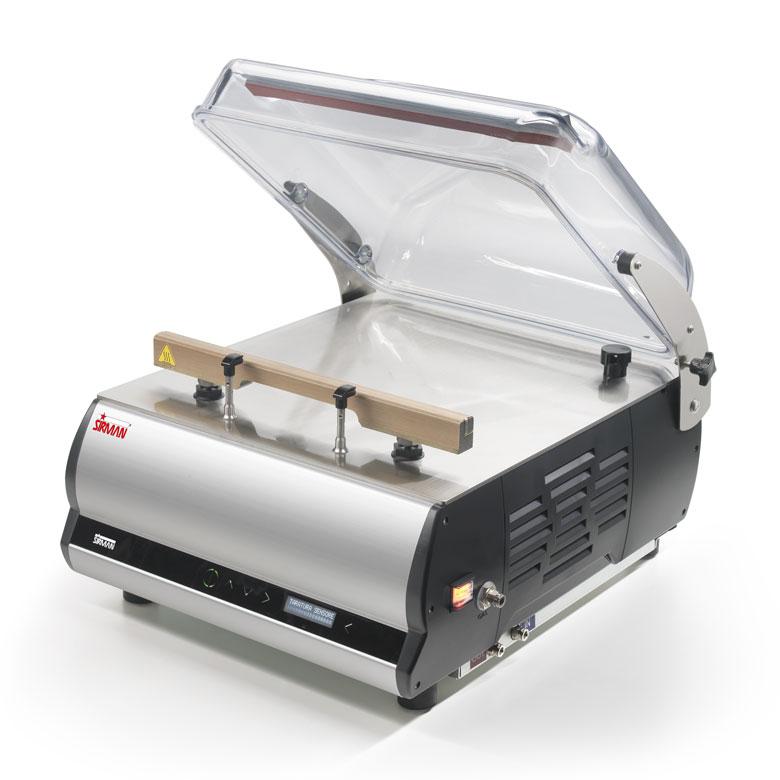
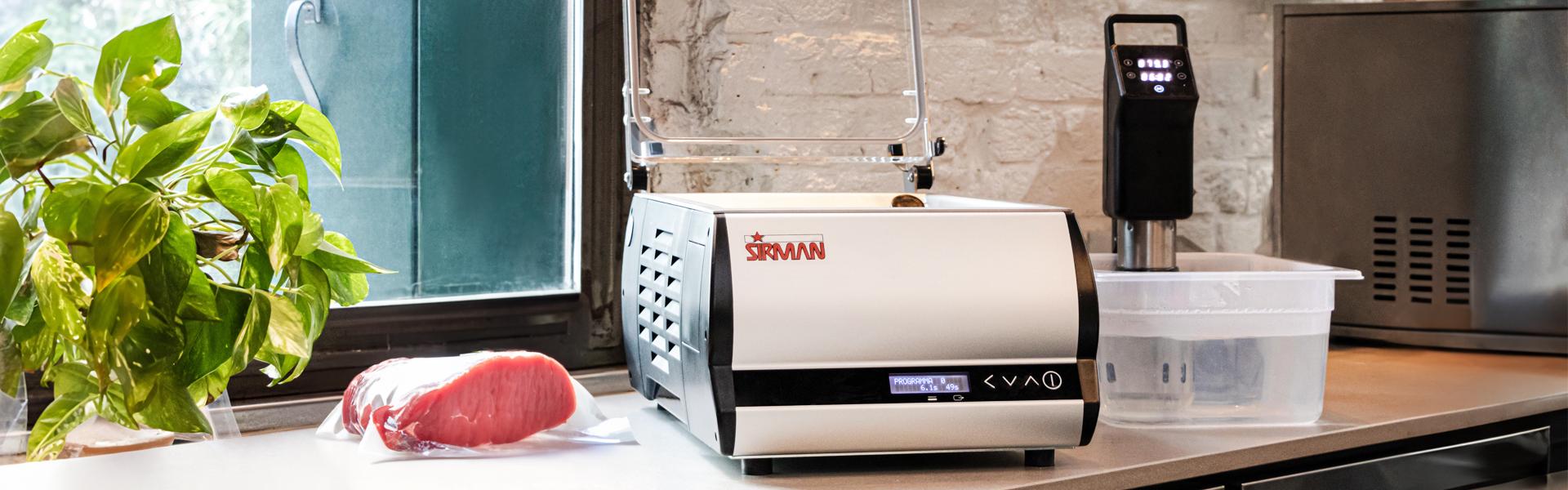
Pictured: a W8 model from the Sirman catalogue
In short, although they all operate similarly, the choice of vacuum sealer will depend on your requirements and how you intend to use it. The Sirman catalogue features a wide selection of professional chamber models, as well as an external vacuum option, specifically designed to meet the needs of the catering and retail sectors.
Other news that may interest you
13
4th December 2025
How to obtain technical support for Sirman products, from blenders to slicersDiscover how to access Sirman support channels.
14th November 2025
How to choose a professional sous-vide machineFind the best sous-vide machine for your business, by taking into account general and user-specific criteria.
12th December 2024
How does a vacuum sealer work? Technology and benefitsA brief guide to vacuum sealers and their technology
9th October 2023
Vacuum cooking in contemporary cuisine: what is a Softcooker, and where did it come from?Discover how this innovative technique has revolutionized professional kitchens through the use of high technology and its exceptional results
1st September 2023
Innovation in the field of sous vide cooking: Softcookers and vacuum sealersSous vide: choose the best machines for perfect cooking.
27th July 2023
Amid cooking and science: how does low-temperature cooking work?Low-temperature, or sous vide, cooking is a slow cooking technique that requires a vacuum to be created using safe and professional machinery, in order to obtain high-quality results.
7th July 2023
How to clean your slicer: a practical guide to sanitation, maintenance and sharpeningA clean slicer is an efficient slicer. Learn the best practices for maintenance and which models are easiest to clean.
News | 14th June 2023
How to use the professional vacuum sealer: accessories, cleaning and maintenanceThis article will teach you everything you need to know about how they work and the necessary maintenance activities.
24th May 2023
Food safety: how to avoid cross contaminationCross contamination is the transfer of microorganisms or chemicals from one food to another. This process generally occurs when raw and cooked foods come into contact.
News | 31st March 2023
All the advantages of kitchen 4.0Maintenance, recipe sharing, fault reporting and consumption monitoring.